
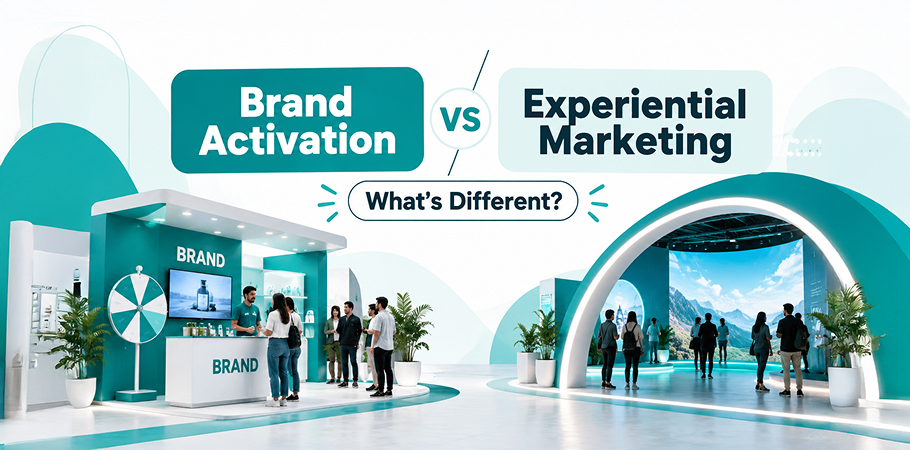
Both brand activation and experiential marketing aim to engage audiences. Their focus is different. Brand activation pushes people to try products to register or buy. Experiential marketing creates moments that build strong relationships with a brand. Knowing the difference between brand activation and experiential marketing lets firms choose the campaign ideas to spend budgets wisely and see clear results.
What Is Brand Activation?
Brand Activation is a strategy developed to engage audiences with the brand and drive action. These campaigns are used by companies in order to introduce a product or service, build a lead, encourage a trial of the product or service, and make purchases. The idea behind such campaigns is that the promotional message becomes an interaction with the customer.
Typical brand activations include product sampling, retail promotions, roadshows, competitive events, and social media/QR codes for digital campaigns.
What Is Experiential Marketing?
Experiential marketing is a form of marketing that involves creating experiences where consumers get to engage with the brand. It does not rely entirely on advertising but rather enables customers to get firsthand experience of the brand, its products, and ideologies.
Some of the forms of experiential marketing include themed pop-up locations, branded installations, live exhibitions, and technology-based experiences such as augmented or virtual reality. Such experiences help enhance brand recall, spark conversations, and create better customer relationships as consumers get an enriching experience to remember and talk about.
What Are the Most Effective Brand Activation Strategies for Driving Customer Engagement?
Brand activation wants audiences to interact with a brand and perform actions. Companies use brand activation to introduce products to promote services to generate leads and increase engagement.
Brand activation campaigns change marketing messages into interactions, letting customers experience a brand beyond normal ads. The main goal is to create a response that supports businesses growing.
Common brand activation strategies involve:
- Product sampling: Providing potential customers the opportunity to try products before making a purchase.
- Retail promotions: Managing in-store demonstrations, special offers, and interactive displays.
- Roadshows: Taking promotional activities to different locations to reach relevant audiences.
- Interactive campaigns: Encouraging participation through competitions, games, and branded activities.
- Digital activations: Use social media, QR codes, and online campaigns to boost engagement and create new leads.
A brand activation campaign works best when it has goals, messages that matter, and a clear call to action. A professional Brand activation agency supports businesses plan and execute campaigns that grab attention and meet marketing goals.
Experiential Marketing Approaches for Memorable Brand Experiences
Marketing seeks to build interactive experiences that allow audiences to feel a deeper bond with a brand. When advertising a product, this method invites people to join activities that show a brand’s identity and values.
Companies use marketing to create memorable brand experiences to boost brand recall and encourage good conversations about their products or services. Popular formats include brand installations, interactive product demos themed pop‑up spaces, branded event experiences and tech‑driven activities, with augmented or virtual reality.
For example, a tech company runs a showcase where visitors explore new inventions through live demos. A lifestyle brand might set up a themed pop‑up where customers try products with hands‑on activities and eye‑catching displays.
These experiences provide audiences with a memory to share. When planned, experiential marketing improves how a brand is seen drives word‑of‑mouth and builds lasting customer ties. These experiences help build lasting trust.
Difference Between Brand Activation and Experiential Marketing
Brand activation and experiential marketing share the goal of connecting businesses with their target audiences. However, they differ in their primary objectives, execution methods, and performance indicators.
| Comparison Factor | Brand Activation | Experiential Marketing |
| Primary objective | Encourage specific customer actions | Build memorable brand experiences |
| Campaign focus | Participation, conversions, and lead generation | Emotional engagement and brand perception |
| Common activities | Sampling, promotional offers, and product trials | Immersive installations, themed events, and interactive showcases |
| Duration | Often campaign-based and short-term | Can range from one-day events to ongoing programmes |
| Success measurement | Leads, registrations, trials, and sales | Brand recall, audience sentiment, engagement, and feedback |
| Expected outcome | Immediate customer response | Stronger brand associations and lasting impressions |
The main difference between brand activation and experiential marketing depends on the result one wants to achieve. Brand activation motivates the target audience to take particular action, while experiential marketing focuses on creating a high-quality, memorable experience.
Nevertheless, these two methods are not alternatives but rather complementary. As part of an experiential marketing campaign, brand activation ins activities such as product sampling, registration, and promotion.
Activations in Marketing That Support Business Growth
Planned marketing activations help businesses turn audience interest into meaningful engagement. When brands create chances for interaction, they communicate their value more clearly. They also learn more about what customers like and expect.
- Improving brand visibility: Promotional events and interactive campaigns introduce companies to audiences. This helps build brand recognition and makes the brand more familiar to people who have not heard of it before.
- Encouraging product trials: Product demonstrations and sampling activities let customers try products before deciding to buy. This hands-on experience builds confidence. It led to actual purchases.
- Generating leads: Campaign registrations, consultations, and interactive activities help brands identify people who’re truly interested. These potential customers are more likely to become buyers.
- Strengthening customer relationships: Personalized interactions make customers feel valued. When people feel connected, to a brand they are more likely to stay loyal and keep coming
- Measuring campaign performance: Tracking participation, leads, conversions and customer feedback gives firms data. This helps them see what worked and what didn’t so they can improve marketing efforts.
To get these benefits, firms should start by setting measurable objectives. They must also choose the audience to decide on the best way to engage them and choose performance indicators for that matter. This way marketing activities support the goals of the business.
Choosing Between Brand Activation and Experiential Marketing for Business Objectives
Choosing the right strategy depends on a company’s marketing priorities, audience expectations, and desired outcomes.
Brand activation is suitable for product launches, retail promotions, product sampling, lead generation, and campaigns developed to encourage immediate customer action. Companies use these activities to introduce an offering, increase trial rates, or encourage customers to respond to a promotional message.
Experiential marketing is especially useful when brands want to build emotional connections, communicate their identity, or create distinctive experiences at product launches, exhibitions, and corporate events. Engaging environments and interactive installations help audiences understand a brand through direct participation.
Businesses combine both approaches. For example, a product launch could feature an immersive demonstration area where visitors explore a product, interact with brand representatives, and register for a trial. The experience builds interest, while the activation encourages a measurable next step. A well-defined strategy helps firms ensure that every campaign activity serves a clear purpose.
How a Brand Activation Agency Strengthens Campaign Execution
Campaigns need to have strategic planning, creativity, coordination, and performance monitoring. A Brand activation agency helps companies achieve this goal.
Agencies support campaign idea generation, customer engagement, location selection, branded installations, promotions, and execution. Agencies help integrate experiential marketing elements in line with the brand’s identity and in creating experiences that customers appreciate at various touchpoints.
Measuring performance is vital, too. Consumer involvement, leads, products tested by consumers, the number of conversions, and consumer feedback are just a few performance indicators that help companies gauge the effectiveness of the campaign.
By planning and executing campaigns, Trevento supports companies in exploring creative experiences to investigate event-led engagement. It helps brands create a campaign that helps them reach their objectives and improve consumer experiences.
Conclusion
The two strategies are different in terms of how they support companies in reaching customers and building brand relationships. While brand activation focuses on making people do something, experiential marketing creates experiences and relationships.
Understanding the difference between brand activation and experiential marketing allows organizations to plan campaigns that align with their objectives. Creativity and strategic planning help to accomplish the objectives.